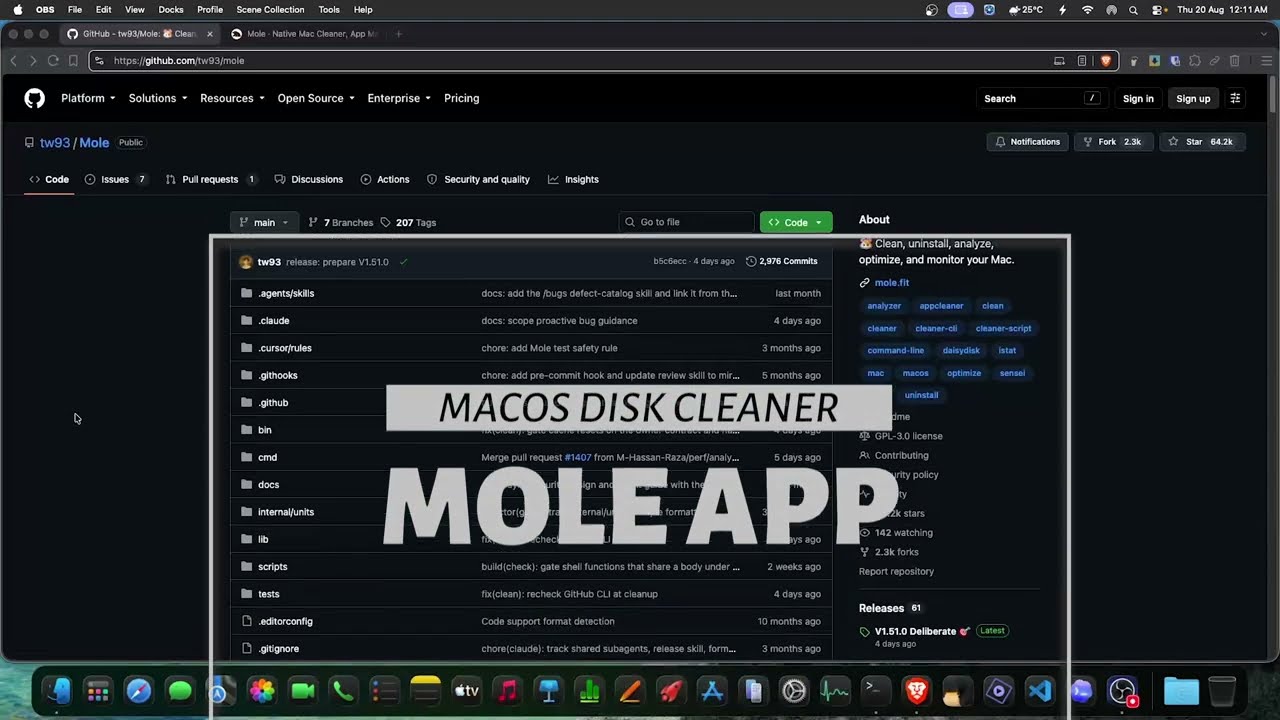
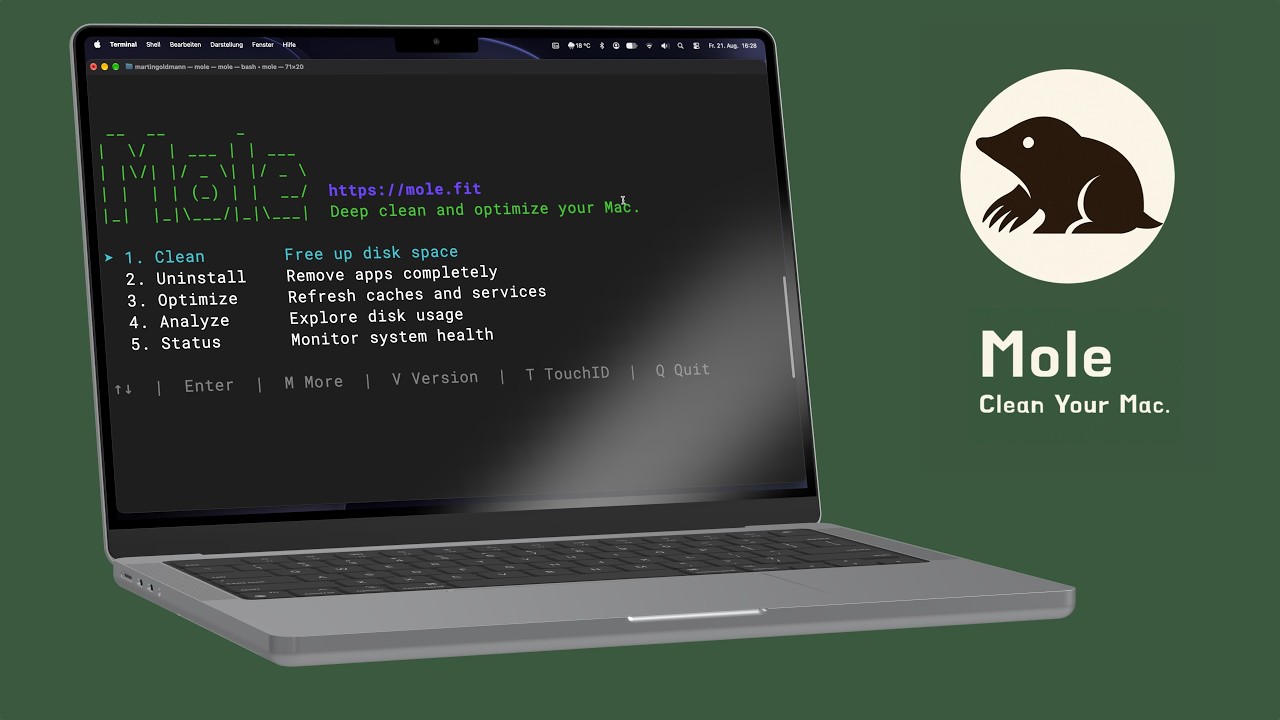
Mole鼴
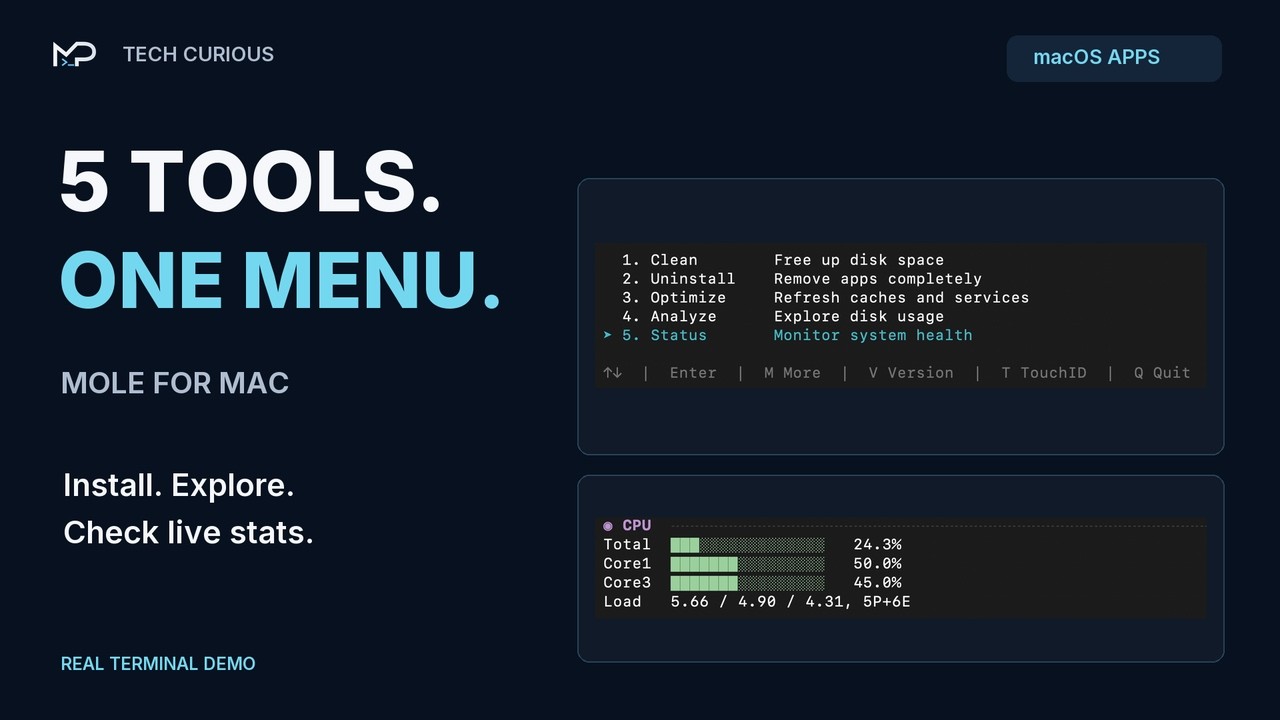
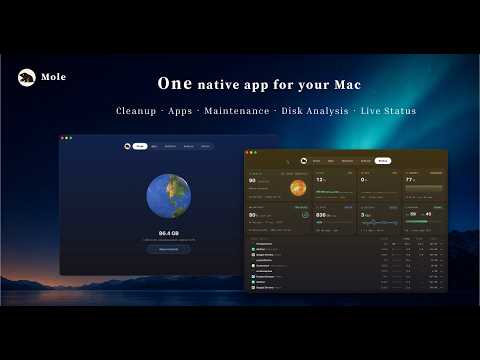
Remove junk, manage apps, run maintenance, analyze disk usage, and watch live status in one native Mac app.
00 · See it
Five tools, one binary
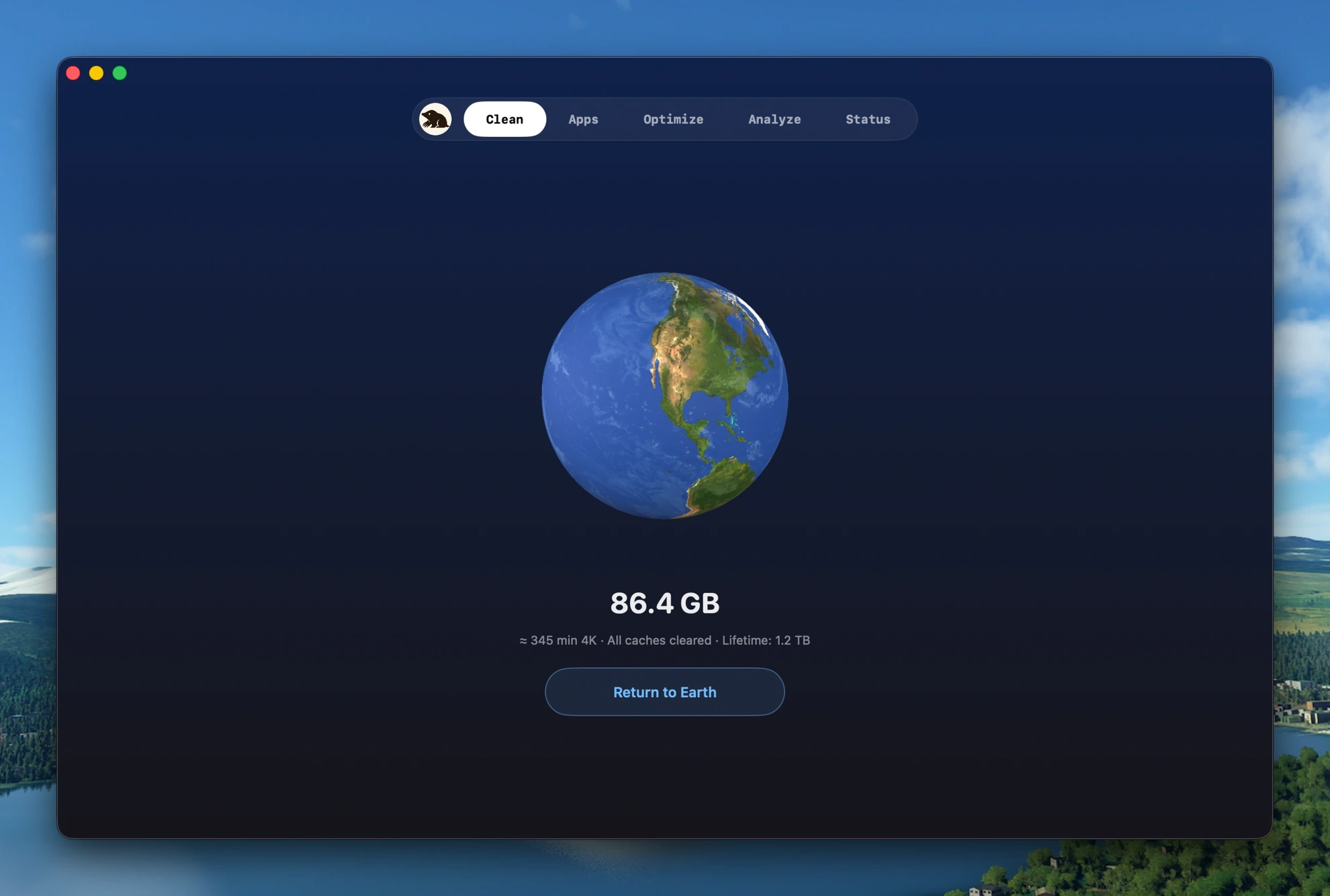
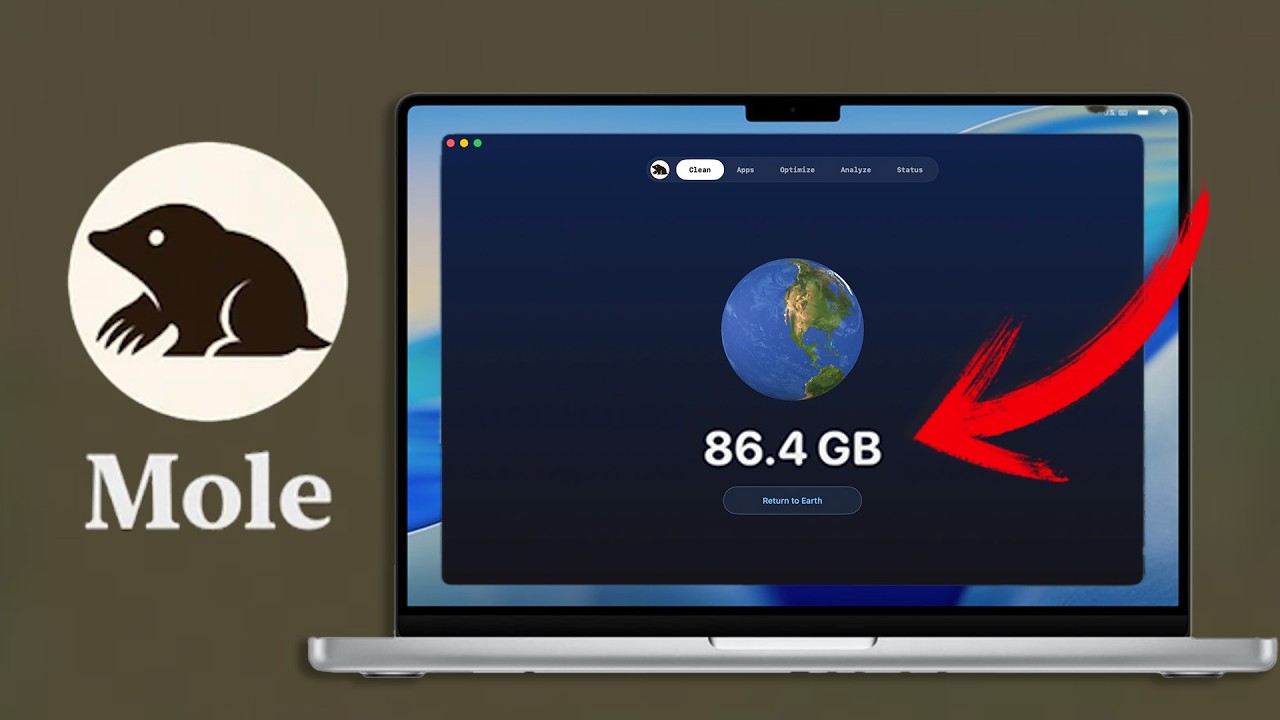
Five tools plus a menu bar HUD: Clean, Software, Optimize, Analyze, and Status, each with its own page and job.
Covers everyday jobs people split across CleanMyMac · App Cleaner & Uninstaller · Sensei · DaisyDisk · iStat Menus
Clean
Rainwater clears the soil.
01 · The Five
A solar system of small jobs
Each tool is named for a planet, and each planet has a job. The naming is not decoration. It is how the tool tells you what it is about to touch.
-
CleanRainwater clears the soil.
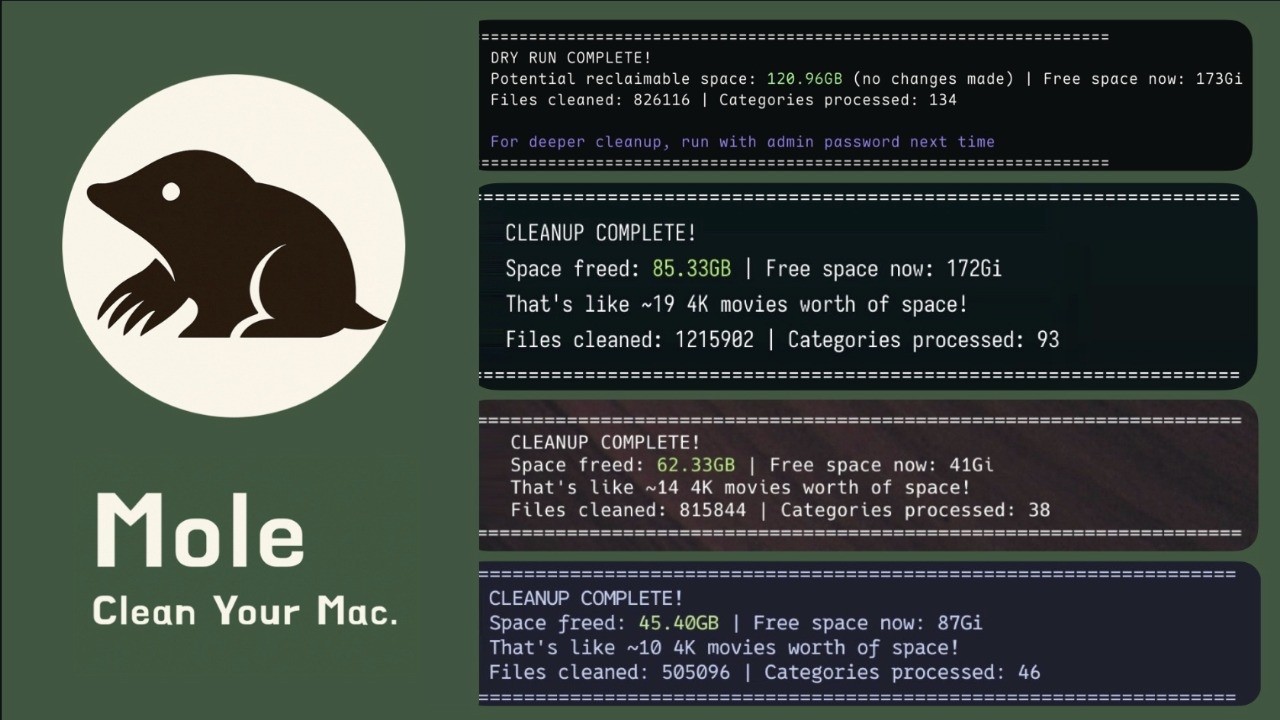
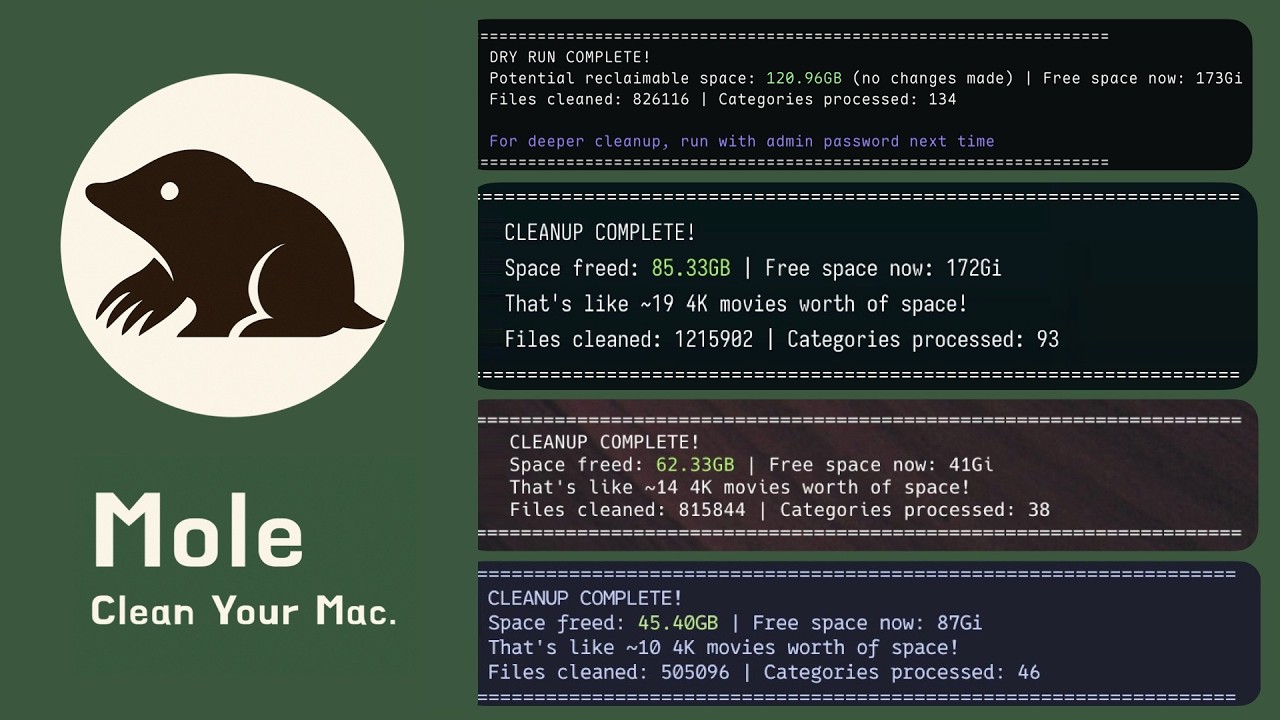
Ten cache categories, from Xcode builds to browser temp files, sorted by what is safest to remove. Review every file before it goes; untick what you want to keep.
-
SoftwareRed dust covers what you've outgrown.
Manage app updates, startup items, and uninstall cleanup in one place. Mole checks Sparkle, Homebrew, and Mac App Store updates, then reviews preferences, support files, launch agents, Dock entries, and personal-data warnings during uninstall.
-
OptimizeClosest orbit, swiftest run.
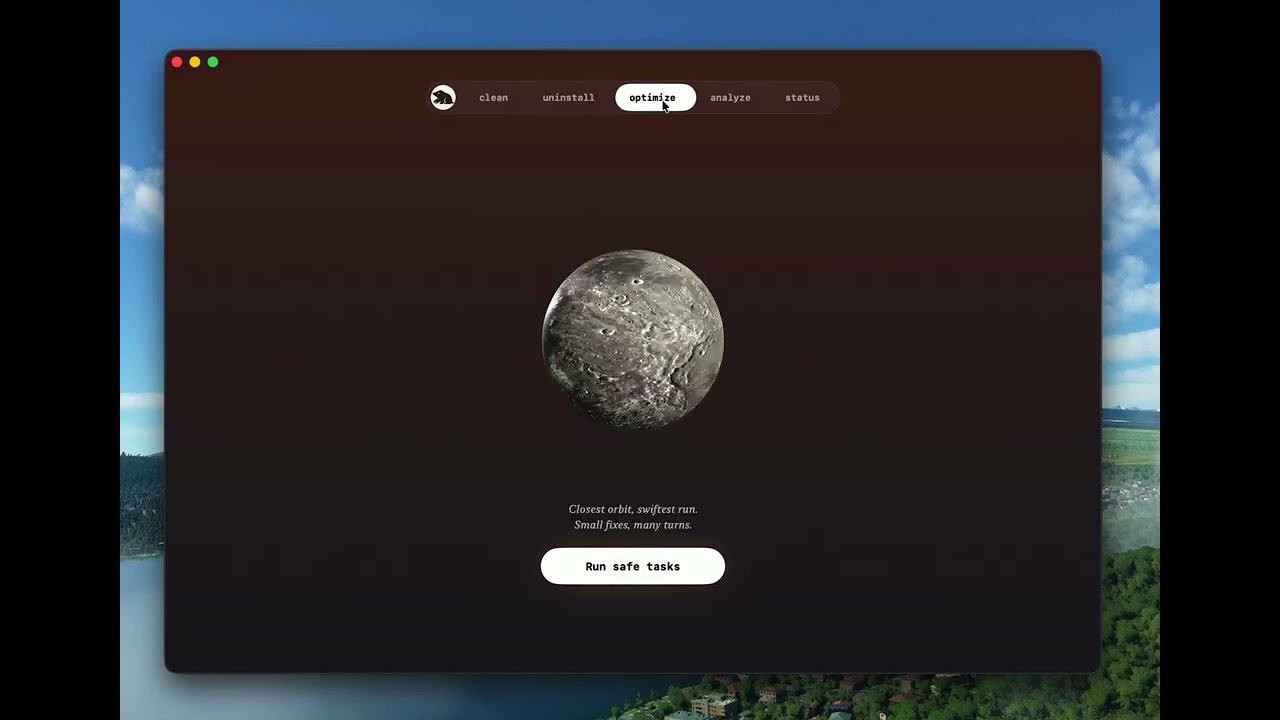
Default maintenance tasks, one tap. Rebuild Quick Look, repair caches and metadata, audit login items, and batch admin work behind one prompt.
-
AnalyzeWidest eye, smallest folder on the map.
A treemap of your whole disk. Drill down into any branch, see size at every level. Right-click to trash or reveal in Finder, without leaving the map.
-
StatusEvery heartbeat, in its light.
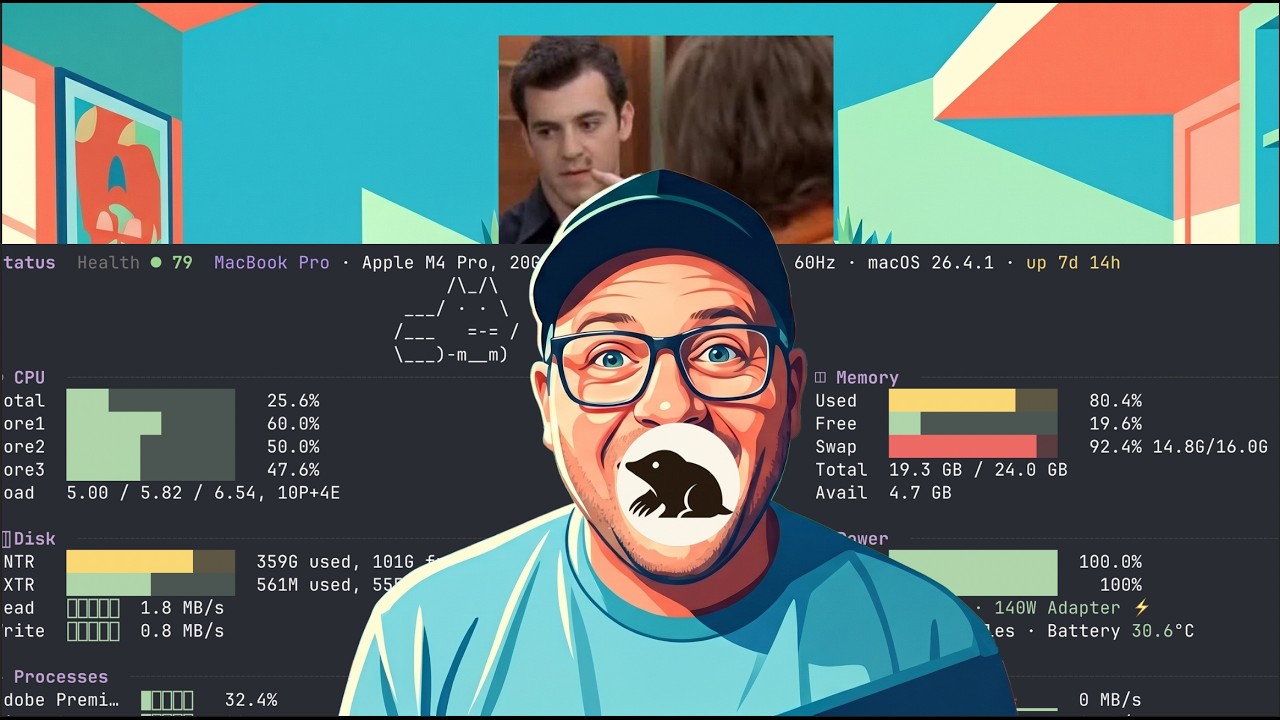
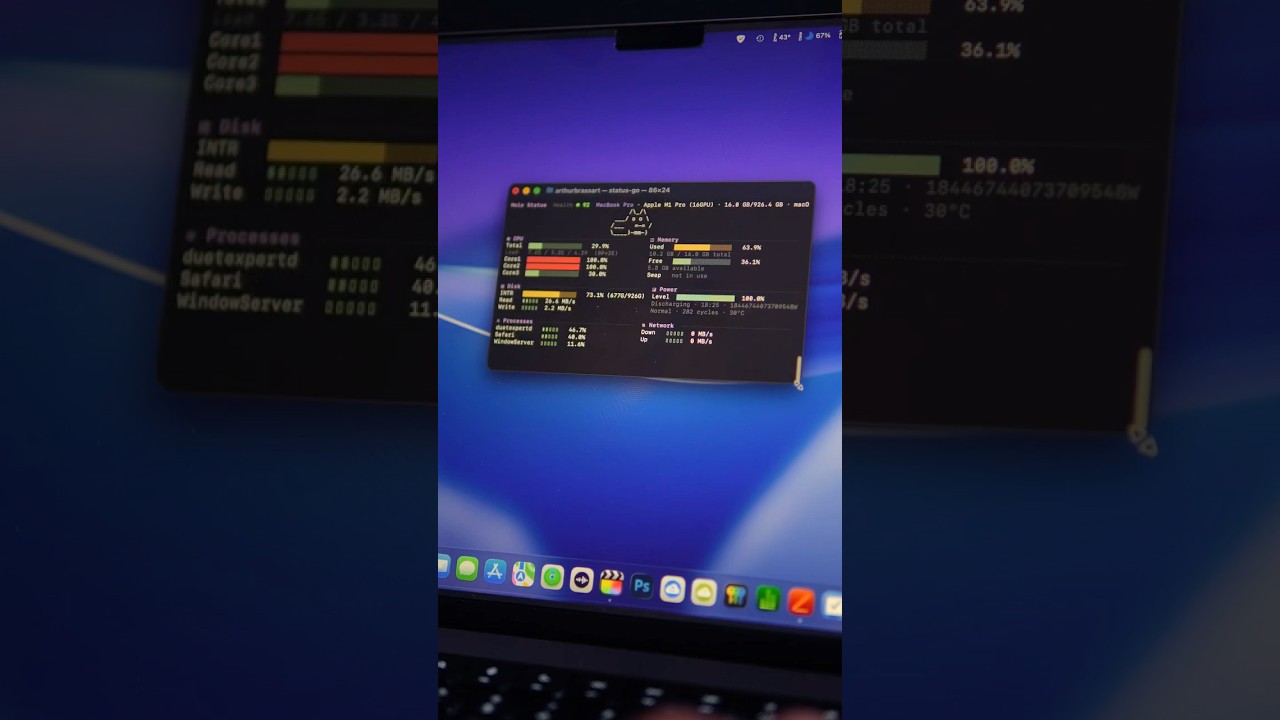
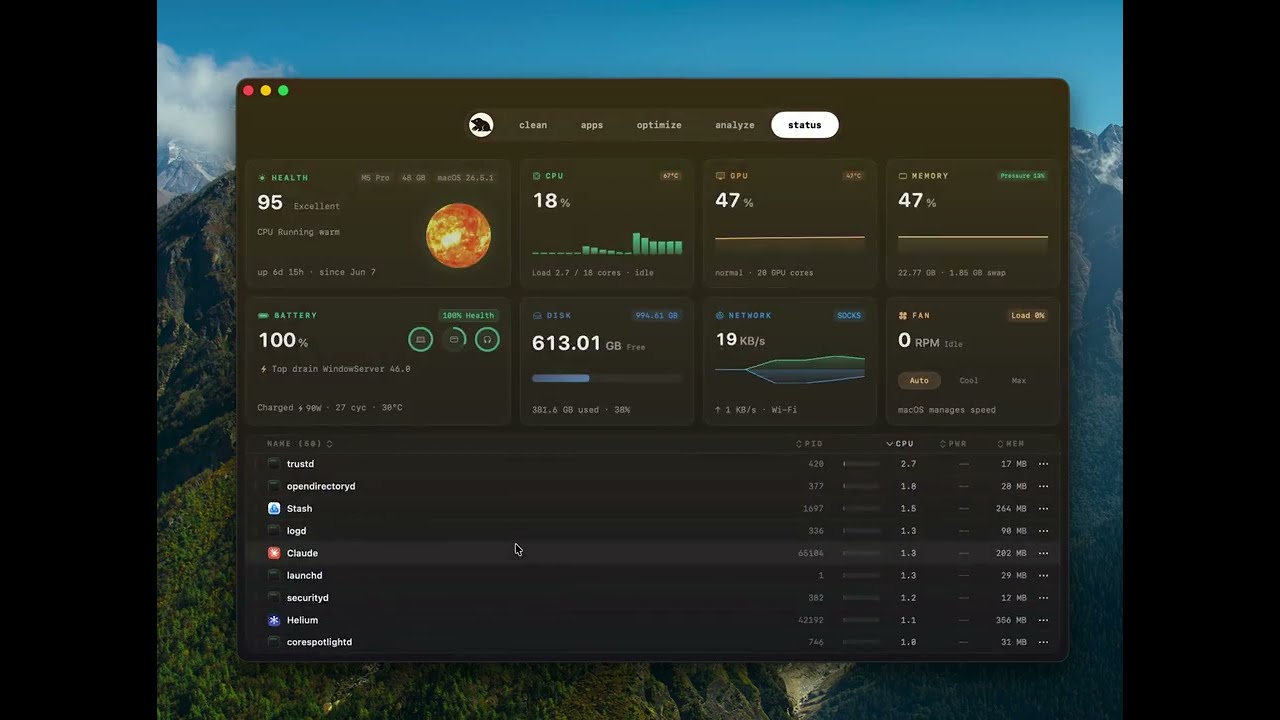
CPU, memory, GPU, disk, network, battery, thermals, fans, uptime, and processes live on one status page. Each metric keeps a 60-second sparkline, and supported Macs can switch between Auto, Cool, and Quiet fan modes.
02 · How it behaves
Conservative by default
Mole starts with conservative cleanup safety, then uses the same boundaries for software, maintenance, disk analysis, and status.
- 1 Nothing leaves your Mac. No analytics, no telemetry. Files stay local. Outbound calls are limited to license validation, Mole's signed update feed, and the App Store, Homebrew, or Sparkle requests needed for app update checks and installs.
- 2 Show before you remove. Every action shows the file list and byte count first. You confirm; Mole acts. Uninstalls go through the system Trash so a wrong tap is recoverable; caches are removed permanently so the freed bytes are real.
- 3 Refuse when unsure. System paths and anything outside known cache locations are denied. The app would rather skip a file than risk one.
- 4 One binary, no upsell. Five tools, all unlocked by one license.
03 · Price
Early bird, no subscription
$9
Buy Mole for $9Early bird until June 15, 2026. $19 from June 16.
All five tools included, plus the menu bar HUD.
or try it free
Lifetime updates · 2 Macs / license · 14-day refund · Card, Apple Pay, WeChat, and more
04 · Questions
Honest answers
- How is the Mac app different from the CLI?
- The CLI stays free and open source for terminal users. The Mac app is the native GUI: disk maps, status dashboard, menu bar HUD, fan controls, startup management, app updates, and one-click workflows.
- What can I try for free?
- Each paid tool works twice without a license. Download the DMG or run
brew install --cask mole-appfrom the official Homebrew cask. - How does Mole compare to CleanMyMac?
- Mole is a one-time purchase with conservative cleanup, visible file review, and no subscription. It also includes disk maps, status, menu bar HUD, fan control, startup management, and app updates.
- Does it work without Full Disk Access?
- Yes. Mole runs a safe scan by default. Full Disk Access lets it reach deeper App Support and container caches, and you can grant or skip it anytime.
- Does Mole upload anything?
- No. File scans and cleanup run locally. Outbound traffic is limited to license validation, Mole's signed update check, and the App Store, Homebrew, or Sparkle requests needed when you check or install app updates.
Switching Macs, invoices, refunds, or anything else? Visit the help page.
Terms of Service
Last updated · May 2026
1. License
When you purchase Mole, you receive a non-exclusive, non-transferable, perpetual license to use the software on up to two Macs at the same time. You may deactivate a device at any time from within the app and reactivate on a different Mac.
2. Restrictions
You may not redistribute, sublicense, reverse-engineer, or modify the software. You may not use the same license key beyond the activation cap.
3. Intellectual Property
Mole, its trademarks, logos, and content are the property of Tw93. The software is protected by copyright law.
4. Disclaimer
The software is provided "as is" without warranty of any kind. Always confirm what will be removed before cleaning.
5. Limitation of Liability
In no event shall Tw93 be liable for any indirect, incidental, or consequential damages arising from the use of Mole. Total liability shall not exceed the amount paid for the license.
6. Contact
For questions about these terms, contact hi@mole.fit.
Privacy Policy
Last updated · May 2026
1. What we collect
When you activate a license, Mole sends the license key, a short device label (derived from your Mac's hostname and a hashed hardware fingerprint), and nothing else. These are sent to Dodo Payments over HTTPS for activation and validation.
2. What we do not collect
Mole does not collect, transmit, or upload file contents, file names, browsing history, documents, passwords, or any data scanned during cleaning. All scanning and cleaning happen locally on your device. Mole keeps a local operation log on your Mac for your reference; this log never leaves your device.
3. Third-party services
Dodo Payments is the merchant of record for Mole. It handles checkout, billing, license key delivery, refunds, and invoices. During checkout, Dodo collects your name, email, and billing address under its own privacy policy. Mole's own signed updates are fetched from https://mole.fit/appcast.xml over HTTPS via Sparkle; app update checks and installs may contact the App Store, Homebrew, or each app's Sparkle feed.
4. Data storage
The license key is stored in the macOS Keychain on your device. We do not maintain a user database beyond what Dodo Payments keeps for transaction records.
5. Your rights
You can deactivate the license at any time from within the app. You may also request access to, correction of, or deletion of any personal data we hold by emailing hi@mole.fit. We will respond within 30 days. If you are in the EU/EEA, you have additional rights under the GDPR, including data portability and the right to lodge a complaint with your local data protection authority.
6. Contact
For privacy questions, contact hi@mole.fit.
Refund Policy
Last updated · May 2026
14-day money-back guarantee
If you are not satisfied with Mole for any reason, request a full refund within 14 days. No questions asked.
How to request
Email hi@mole.fit with your Payment ID or purchase email. Refunds are typically processed within 5 business days.
Please include a short note in the email about what felt difficult or did not meet expectations. It helps me process the request faster and keep improving Mole.
License deactivation
Once refunded, your license key is deactivated. You may re-purchase at any time.
Help
A short walkthrough · buy, activate, and ask for help.
1. Download and try
Click Download and try free. Drag Mole into Applications and launch it. Each tool works twice without a license.

2. Buy a license

From the homepage, click the buy button. You will land on the secure Dodo Payments checkout page.
- Fill in Contact Information: your name, a regular email inbox, and phone. The license key will be sent there. Before paying, double-check the spelling. Avoid forwarding or privacy relay addresses such as
@duck.com; Dodo Payments license emails may not reach them. - Fill in Billing Address: country, city, region, postal code.
- Click Continue to Payment.
- Pick a payment method: Card, Apple Pay, Google Pay, WeChat, or Cash App.
- Confirm payment. The license key arrives in your inbox within seconds.
3. Activate Mole
- Open the email from Dodo Payments and copy the license key.
- Open Mole. Press
Cmd + Shift + L(or open the Mole menu in macOS's menu bar and choose License…). - Paste the key and click Activate. Mole removes accidental spaces and line breaks automatically.
- You will see All tools unlocked. That is it.
4. Switch to a new Mac
Each license works on up to 2 Macs at the same time. To move it: open Mole on the old machine, press Cmd + Shift + L, click Deactivate this device. Then activate on the new machine with the same key.
5. Refund and invoices
If Mole is not what you wanted, email hi@mole.fit within 14 days with your Payment ID or purchase email. See the Refund Policy for full terms.
Please include a short note in the email about what felt difficult or did not meet expectations. It helps me process the request faster and keep improving Mole.
Dodo Payments generates a receipt automatically after each purchase. For a formal invoice (with a company name or VAT info), email hi@mole.fit within 30 days of purchase.
6. Settings and shortcuts
Press Cmd + , to open Settings. Settings has three tabs.
General covers the basics:
- Language sets the interface language after a relaunch.
- Launch at Login starts Mole automatically when you log in.
- Hide Dock Icon runs Mole as a menu-bar-only app.
- License shows activation status and lets you activate, deactivate, switch devices, or recover from a device-limit state.
- Full Disk Access shows permission status and opens the right System Settings pane.
Maintenance covers cleanup behavior:
- Cache Removal decides how caches are handled: Permanent frees space immediately, while Trash stays recoverable.
- Protected Items opens the whitelist manager; anything you protect is skipped by future scans.
- Optimize Dock Refresh toggles whether Optimize includes a Dock restart in its default run.
Menu Bar controls the menu bar HUD and its quick tools:
- Menu Bar Monitor keeps live metrics, a compact icon, or a moving runner in the macOS menu bar.
- Runner style picks the character: Mole, Cat, Rabbit, or Squirrel.
- Visible metrics chooses what shows up on the runner's two lines from CPU, Memory, Temperature, Disk, and Network.
- Fan controls appear on supported Macs with Auto, Cool, and Quiet modes.
- Shortcuts for Menu Bar Toggle, Keep Screen On, and Clean Screen are recorded here; none have a default.
- Clean Screen Input Lock uses macOS Accessibility to block input during a Clean Screen session; the toggle links to the Accessibility pane.
- Privacy Signal Notifications alerts you when the camera or microphone starts being used.
Shortcuts:
Cmd + ,open SettingsCmd + Shift + Lopen License panelEscclose any overlay (Settings, License, Doctor, review panels)- Menu Bar Toggle, Keep Screen On, and Clean Screen each take a custom shortcut you record in Settings → Menu Bar.
7. Tips for daily use
The earlier sections cover setup and operation. These notes match Mole to how you actually work.
Menu bar shortcuts
Three optional global shortcuts live in Settings → Menu Bar: Menu Bar Toggle, Keep Screen On, and Clean Screen. None ship with a default, so the hotkeys only fire after you record one. Click into a field, press the combination, then press Enter; Mole replaces any previous binding for that action.
Picks that work well: ⌘⇧O for Menu Bar Toggle to peek at CPU and memory in passing; a function key or ⌥⇧K for Keep Screen On while presenting or downloading; ⌃⌥C for Clean Screen before a screen share or focused writing session.
Optimize cadence
Optimize quietly skips tasks when it could disturb device state you may be relying on: an active VPN, Bluetooth HID or audio, or an external display or audio device. Skipped tasks surface a reason in the result list so you can review what ran. The Dock restart adds a 7-day cooldown and tells you how many days since it last ran.
Suggested rhythm: run Optimize when memory pressure stays high or apps open slowly, not as a daily habit. Between Optimize runs, the Doctor tab is a lighter health checkpoint.
Cache removal mode
Permanent (the default) frees space immediately and the scan results cannot be restored. Trash sends everything to the macOS Trash, so you can drag items back to the original location if a cleaned cache turns out to be more important than expected.
Trash mode is a calm safety net for the first few cleanups, or whenever a category is unfamiliar. Open Docs → Clean to see which sections are auto-clean and which are review-only.
8. Run Doctor inside Mole
From the menu bar pick Help → Run Doctor…. Mole gathers a short report covering your Mac, permissions, recent operations, and environment. Click Copy Report to share it in chat, or Open GitHub Issue to land in a bug form with everything pre-filled.
Full Disk Access is missing
Mole needs Full Disk Access to scan caches under ~/Library and system locations. Open System Settings → Privacy & Security → Full Disk Access, enable Mole, and relaunch the app. Mole only reads from these locations; it never sends file contents anywhere.
Memory pressure is high
macOS reports elevated memory pressure when active memory plus compressed memory crowd out the cache. Close unused apps (especially browsers with many tabs and large Electron tools). Mole's Status tab lists the top processes by CPU and memory if you want to see who is using the most.
Disk is almost full
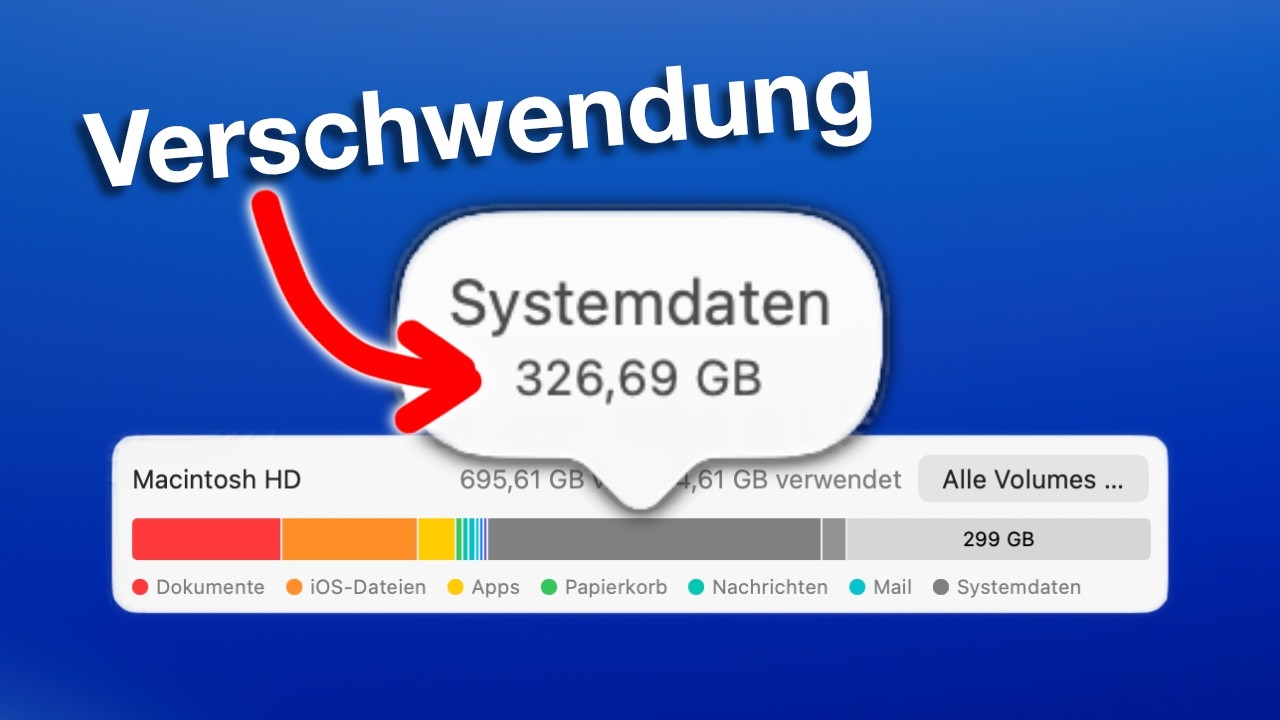
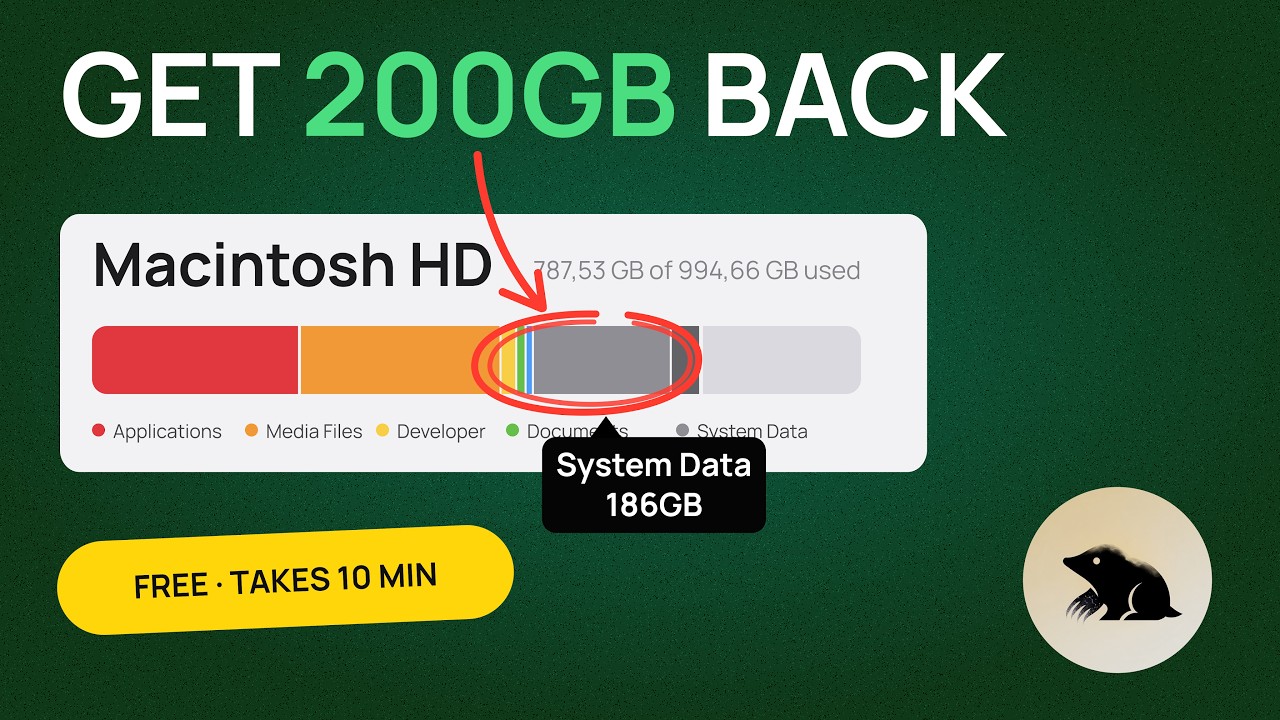
Once your startup disk crosses 90% used, macOS starts swapping and slowing down. Open the Clean tab to recover caches, logs, and trash. For one-off large folders, the Analyze tab visualises space by directory so you can spot the heavy hitters.
Battery health is low
Mole flags this when maximum capacity drops below 80% or the battery passes 1000 charge cycles. There is no software fix for a worn battery: check the exact reading under System Settings → Battery → Battery Health, then book Apple service if runtime no longer holds up. The Status tab keeps the same reading visible.
Mole's operations log can't be written
Mole writes a per-operation log at ~/Library/Logs/mole/operations.log. If the disk is full or that directory is unwritable, the log fails silently. Free up some space, then quit and reopen Mole; the doctor report will turn green on the next run.
Recent operations failed
A failure usually means one path inside a clean or uninstall batch was protected by macOS, blocked by another app, or already gone by the time Mole reached it. Open the tab where the failure happened (Clean, Uninstall, Optimize) and inspect the details overlay; each failed row carries a reason.
9. Report a problem
Before filing anything, check open issues first; someone may have hit the same thing.
- Mac app bug or crash
- Run Doctor first (section 8 above). Click Open GitHub Issue in the Doctor overlay to land in a bug form with your system report pre-filled. If you prefer to file manually, copy the report and paste it into the form.
- Mac app feature idea
- Open the feature request form. Describe the problem the feature would solve, not just the feature itself.
- CLI bug or suggestion
- The Mole CLI is a separate open-source project. File CLI-specific issues in the CLI issue tracker. Include your macOS version and
mo versionoutput. - License, payment, refund, or private details
- Email hi@mole.fit with your purchase email, Payment ID, and approximate payment time.
Documentation
Last updated · May 2026
Overview
Mole has two interfaces with the same cleanup scope, safety rules, and protection lists. The CLI is free, open source, and MIT-licensed. The Mac app is a native SwiftUI companion with a $9 launch early-bird license until June 15, 2026; the regular one-time price is $19 from June 16. It uses native execution for the Mac workflows; the CLI adds a few terminal-only commands.
Mac App
Installation
Download the DMG from the home page, or install via Homebrew: brew install --cask mole-app.
Clean (Earth)
Scans ten categories: app caches, system caches and logs, developer tools (Xcode, npm, pip, Gradle), AI tools (ChatGPT, Claude, Codex, Copilot, Cursor, Antigravity), browsers (Chrome, Edge, Arc, Safari, Firefox), cloud storage clients, design tools (Adobe, Figma, Sketch), communication apps (Slack, Discord, WeChat, Zoom), and miscellaneous temp files. The Trash is listed separately at the end.
The review list is sorted by deletion impact: regenerable caches appear first, user-visible state last, Trash always at the bottom. Hardlink-aware sizing means files shared across tools (uv, pnpm) are not double-counted. Default deletion is permanent so the freed bytes match the headline. One toggle in Settings routes everything through the system Trash instead.
A small set of categories is review-only by default: package caches with real rebuild cost (npm, yarn, pnpm, bun, CocoaPods, Gradle, Maven) and developer state worth a glance before clearing. Auto-clean items arrive pre-checked; review-only ones are visible for context but stay unchecked. The Cache Removal toggle in Settings routes everything through the Trash if you prefer a recoverable safety net.
Software (Mars)
Software combines app updates, startup management, and uninstall cleanup. The Updates view checks Sparkle, Homebrew Cask and Formula, and Mac App Store apps, then installs supported updates in place or opens the App Store when macOS requires that handoff.
The Startup view lists Login Items, Launch Agents, Launch Daemons, and background items. You can disable supported entries, reveal their files, or jump to System Settings for Apple-managed items.
For uninstall, pick apps to remove. Mole finds leftover files in fifteen-plus Library subdirectories, including Application Support, Caches, Preferences, Logs, Launch Agents, Launch Daemons, Login Items, Containers, Group Containers, Saved Application State, and Input Methods. Dock entries are cleaned automatically, and personal-looking data triggers a warning before deletion.
Updates ship in-app where possible: Sparkle and Homebrew Cask installs run inside Mole; Mac App Store updates go through CommerceKit and fall back to the App Store app on auth or timeout issues; other apps open so their own updater can take over. Cmd-click adds rows to a multi-uninstall batch, and any per-app failure stays in the list for retry.
Root-owned /Applications/*.app bundles need one administrator confirmation on first removal in a session; later removals reuse the same authorization until you quit Mole. The Startup view toggles login items and validated LaunchAgents / LaunchDaemons directly when it can match them to a stable launchd service; entries managed by macOS background task management without a clear handle are routed to the matching System Settings pane instead.
Optimize (Mercury)
Default maintenance tasks run with one tap. Non-admin tasks run silently; admin tasks are batched behind one prompt when needed.
Tasks include: rebuild Quick Look, Spotlight when safe, font cache and Launch Services garbage collection; vacuum SQLite stores; clean saved application state, quarantine events and notification history; repair broken preferences, Launch Agents and shared file lists; optional Dock refresh; audit login items; and run periodic maintenance.
Safety gates skip tasks when conditions are unsafe: font cache rebuild is skipped when browsers are open, Spotlight reindex is skipped on battery power, and DNS or network-stack resets are not part of the default maintenance set.
Optimize also skips device-touching tasks when an active VPN, Bluetooth HID or audio, or an external display or audio device is detected; skipped tasks list a reason in the result panel so you can see what ran. The Dock restart adds a 7-day cooldown and reports the days since its last run, so it never thrashes the Dock on back-to-back invocations.
Analyze (Jupiter)
A treemap visualization of your entire disk. Drill down into any directory to see size at every level. Right-click any entry to move it to the Trash or reveal it in Finder, without leaving the map view.
Entries that could not be sized (permission-restricted folders, TCC-gated containers) are surfaced with a retry option instead of being silently dropped. Protected navigational roots (/, /Users, /Applications) cannot be trashed. Disk scan results are cached for 24 hours for fast re-entry.
Single-click a directory in the treemap to drill in; the breadcrumb row above the map jumps back to any ancestor. Hover any row in the list view to surface a trash icon for that path, and right-click for Move to Trash with confirmation. Block area in the treemap is proportional to byte size, so the biggest space hogs always sit visually largest.
Status (Sun)
Eight live tiles on one bento dashboard: a Health hero with score and uptime, then CPU, GPU, Memory, Battery (or Thermal on desktops without a battery), Disk, Network, and a flex Fans or Thermal tile depending on hardware. Each metric carries a 60-second sparkline, and supported Macs expose fan controls for Auto, Cool, and Quiet modes.
The process list below the grid updates every second. Click any column header (Name, CPU, Memory) to sort. Click a row to pin it; pinned processes stay at the top across refreshes so you can watch a specific app without losing it in the scroll.
All five columns (Name, PID, CPU, Power, Memory) sort on click; click again to flip direction. Right-click a row for Pin/Unpin (kept across refreshes and app restarts), Terminate (a graceful TERM with a forced KILL fallback), and Copy Executable Path. The Battery tile's top-drain row links directly to that process in the explanation sheet.
Menu bar HUD
An optional always-on monitor in the macOS menu bar. Choose live metrics, a compact icon, or a small runner animation whose motion follows system load. Pick the runner character from Mole, Cat, Rabbit, or Squirrel. The popover shows a Health hero (score, chip, memory, macOS, uptime), hardware tiles, fan controls where supported, top five CPU processes, and a Clean Watch lifetime summary.
Quick tools live at the bottom of the popover: privacy signal indicators light up when the camera or microphone is in use, Keep Screen On has a duration menu (1h / 4h / Until I stop), Clean Screen blanks the desktop for focused work with an optional Accessibility-gated input lock, and Eject Volume safely unmounts external drives. A right-click quick menu opens any tool, a customizable global keyboard shortcut summons Mole from anywhere, and hiding the Dock icon turns it into a menu-bar-only app. Configure everything under Settings → Menu Bar.
Display Mode picks between the runner animation and a Metrics view of two configurable rows. Each row can independently show CPU, Memory, Temperature, Disk, or Network. The runner character (Mole, Cat, Rabbit, Squirrel) is purely visual and never changes which metrics are sampled.
Doctor
From the menu bar: Help → Run Doctor…. Mole gathers a short diagnostic report covering your Mac model, macOS version, permissions, recent operations, and environment. Click Copy Report to paste it into a chat, or Open GitHub Issue to land in a bug form with the report pre-filled.
Doctor detects five conditions: missing Full Disk Access, elevated memory pressure, disk usage above 90%, unwritable operations log, and recent operation failures. Each condition links to a help article with resolution steps. See the Help page for details on each.
Settings
Settings has three tabs. General: interface Language (applies after a relaunch), Launch at Login, Hide Dock Icon, License activation and device management, and a Full Disk Access shortcut. Maintenance: Cache Removal mode (Permanent deletion, the default for caches, or Trash routing), Protected Items whitelist, and the Optimize Dock Refresh toggle. Menu Bar: enable the Menu Bar Monitor, pick a runner character (Mole / Cat / Rabbit / Squirrel) or switch to live metrics, choose visible metrics for both runner lines, configure fan behavior where supported, record custom keyboard shortcuts for Menu Bar Toggle / Keep Screen On / Clean Screen, toggle Clean Screen Input Lock (Accessibility), and turn Privacy Signal and Keep Screen On notifications on or off. License activation is also reachable any time with Cmd + Shift + L.
CLI
Installation
Via Homebrew: brew install mole. Via script: curl -fsSL https://raw.githubusercontent.com/tw93/mole/main/install.sh | bash. Run mo for the interactive menu, or any subcommand directly.
Shared commands (also in the Mac app)
mo clean
Deep cleanup across the same ten categories as the Mac app. Supports --dry-run to preview without deleting, --debug for detailed logs, and --whitelist to manage protected caches. Skips caches of running apps automatically.
mo uninstall
Interactive app selection with remnant detection. Shows app size, bundle ID, and last-used date. Finds the same fifteen-plus leftover categories as the Mac app. Supports --dry-run.
mo optimize
Runs CLI maintenance tasks with admin prompts when needed. Its exact task set can differ from the Mac app's default Optimize list. Use --whitelist to exclude specific tasks from future runs.
mo analyze
Interactive treemap in the terminal. Navigate with arrow keys or Vim bindings (h/j/k/l). Trash files directly from the map. Supports --json output and custom paths like mo analyze /Volumes for external drives.
mo status
Live system dashboard: CPU, GPU, memory, disk I/O, network, battery, thermals, uptime, health score, and top processes with sixty-second sparklines. Supports --json for piping to other tools.
CLI-only commands
mo purge
Finds old build artifacts across project directories: node_modules, target, .build, build, dist, venv. Scans configurable paths (default: ~/Projects, ~/GitHub, ~/dev). Projects younger than 7 days are marked "Recent" and unselected by default. Supports --dry-run and --paths to configure scan directories.
mo installer
Discovers .dmg, .pkg, and .zip installer files in Downloads, Desktop, Homebrew cache, iCloud, and Mail attachments. Labels each file by source location. Supports --dry-run.
mo touchid
Enables Touch ID for sudo commands. Run mo touchid enable to configure, mo touchid disable to revert. Supports --dry-run.
Utility commands
mo completion
Sets up shell tab completion for Bash and Zsh. Auto-detects your shell and updates the appropriate config file.
mo update
Self-update to the latest stable release. Use --nightly for the latest unreleased build from main (script installs only). Use --force to reinstall the current version.
mo remove
Uninstalls Mole CLI from your system, including config files and shell integration. Supports --dry-run.
Safety
Both the CLI and Mac app share the same safety principles:
Path protection. A built-in deny list covers system-critical directories, your home folder's essential structure, and anything outside known cache locations. Symlinks are resolved and validated before any operation.
Process awareness. Caches belonging to running apps are skipped during cleanup. Browser caches are not touched while the browser is open.
License gate. In the Mac app, each destructive tool (Clean, Uninstall, Optimize, Analyze trash) works twice for free. After that, an active license is required. Scanning is always free.


Whitelist. Both the CLI (~/.config/mole/whitelist) and Mac app let you protect specific caches or optimization tasks from future runs.

Operations log. Every deletion is recorded at ~/Library/Logs/mole/operations.log. The Mac app's Doctor overlay checks the health of this log and surfaces any recent failures.
Preview first. The CLI supports --dry-run on every destructive command. The Mac app shows the full file list and byte count before any action.
Troubleshooting
The Mac app includes a built-in Doctor that detects common issues. Open it from Help → Run Doctor… in the menu bar. For specific conditions, see the Help page.
For the CLI, add --debug to any command for detailed logs. Review the operations log at ~/Library/Logs/mole/operations.log for recent activity. If a command fails silently, check whether Full Disk Access is granted in System Settings.
To report issues, see the Report a problem section on the Help page.
Releases
What changed in each version of Mole.
v1.6.0 May 26, 2026 ↓ Preview
- Menu bar quick actions (new): privacy indicators light up when the camera or microphone is in use, Keep Screen On gets a duration menu, Clean Screen blanks the desktop for a focused moment with optional input lock, and a one-click Eject Volume control rounds out the menu bar tools.
- Clean Screen mode (new): a full-screen blackout for focused work with an explicit Escape exit, plus an opt-in Accessibility-gated input lock for true do-not-disturb.
- Login item removal: the Software tab now permanently removes login items in addition to disabling them, with tighter privileged-helper validation around startup paths.
- Better uninstall coverage: canonicalized path guard, broader remnant evidence per app, recovery from Homebrew cask uninstall collisions, and unified running-app detection across show, intercept, and terminate flows.
- AI tool support: Antigravity user state is now protected alongside its cache allowlist, matching how Claude, Codex, ChatGPT, and Cursor are already handled.
- Status accuracy: Apple Silicon thermal readings corrected, network interface type read through SystemConfiguration, battery diagnosis suppressed on Macs without a battery, and network metadata fetching deferred past the cache short-circuit.
- Optimize boundaries: VPN detection now covers more interface types than
utun, so Optimize correctly skips when a tunnel is up; fan apply permission failures explain themselves more clearly. - Polish: stabilized hero planet motion, raised planet render quality to follow backing scale, centralized Clean review presentation, the menu bar HUD now shows upload before download, arrows dropped from the HUD network column, and privacy notification titles are localized.
v1.5.0 May 23, 2026
- Menu bar runners: choose a small moving companion in the menu bar, keep live metrics visible, use the right-click quick menu, and run Mole as a menu-bar-only app without a Dock icon.
- Fan controls in Status: supported Macs can switch fans between Auto, Cool, and Quiet, with live RPM and safer automatic restore behavior.
- In-app app updates: the Software tab can check and install updates from Sparkle, Homebrew Cask and Formula, and the Mac App Store, with clearer progress and explicit App Store handoff when needed.
- Startup management: review Login Items, Launch Agents, Launch Daemons, and background items from the Software tab, then disable or reveal them without hunting through System Settings.
- Better uninstall coverage: app search understands common aliases, leftovers include input methods, and WeChat Input Method plus Doubao Input Method can now be found and removed safely.
- Safer cleanup: log cleanup now accepts only real rotated logs, protects proxy and VPN app state, and only unlocks generic Application Support cache leaves when strong Chromium/Electron markers are present.
- Analyze polish: clearer disk labels, smoother drill-down breadcrumbs, and better prefetching make large folder maps easier to read.
- License device management: activation flows handle device switching and reclaim paths more clearly, so moving Mole to a new Mac needs less support back-and-forth.
- Reliability fixes: Homebrew cancellation now stops the child process, fan presets recover correctly across upgrades, Trash validation is stricter, and menu-bar-only mode guards against ghost states.
v1.4.1 May 18, 2026
- Menu bar HUD (new): live CPU, memory, and network speed in the menu bar, with an icon-only compact mode and a right-click quick menu.
- Software update checks (new): Mole now watches for new versions of your apps across the App Store, Sparkle, and Electron, and flags unseen updates with a sidebar badge.
- Status redesigned: new battery and disk tiles. Battery shows health and the most power-hungry app, disk uses color to signal when space runs low, and network now draws dual up and down sparklines.
- Clearer cleanup: see the exact path and progress while scanning, results sorted by impact, a lifetime cleanup total on the completion screen, and items you can exclude for good.
- Uninstall and Optimize: sort the app list by name, size, or install date, uninstall apps on external drives, and clear leftover files scattered across the system, all with a single admin prompt.
- Settings and window: a Launch at Login toggle, native macOS fullscreen, and a wider default window that always stays within the visible screen.
- More stable and secure: new battery and high-CPU alerts in Doctor, trial and license data moved to the Keychain, 53 missing translations filled across nine languages, and background sampling pauses when the window is hidden.
- Fixes and polish: Optimize no longer restarts Bluetooth, so a connected wireless mouse or keyboard can’t drop while it runs. Broken login-item cleanup now skips apps that live on an unplugged external drive. Licensing no longer shows a Keychain access prompt, plus battery tile spacing and other small refinements.
v1.3.0 May 13, 2026
- Cleanup safety: reclaimed space is now measured from the filesystem with hardlink-aware exclusive sizing. Sensitive remnants (keychains, credentials) trigger a warning before deletion. Root-owned apps go through the recoverable Trash path.
- Uninstall: iOS wrapper apps and bilingual apps are now detected and removable. Dock ghosts, login items, and launch agents are cleaned in one pass with a single admin prompt.
- Clean review: results sorted by deletion impact (regenerable caches first, user-visible state last). Completion screen shows cumulative lifetime cleanup stats.
- Status: click any column header to sort the process list; click a row to pin it so it stays visible across refreshes.
- Analyze: narrow treemap cells now rotate labels vertically so directory names stay readable.
- Doctor: built-in diagnostic report from the Help menu covering permissions, system pressure, disk space, and operations logs.
- Languages: French and German across the Mac app and website, with localized screenshots.
v1.2.0 May 11, 2026
- No more keychain password prompts on launch or passive license reads.
- No more TCC dialogs when scanning without Full Disk Access.
- Overlay panels no longer flash white on first render.
- ESC key now reliably dismisses all overlays and cancels running operations.
- Status dashboard uses less CPU.
- Refined planet colors and accent palette.
v1.1.0 May 11, 2026
- System cache cleanup with admin privileges (1-3 GB typical).
- Uninstall now auto-quits running apps, cleans Dock and login items.
- All 22 optimize tasks run (admin tasks via one-time auth).
- 50+ new app cache targets (Steam, Notion, IINA, Raycast, and more).
- Homebrew cask --zap for thorough removal.
- Root-owned app uninstall via Finder.
v1.0.0 May 6, 2026
- Five tools in one app: Clean, Uninstall, Optimize, Analyze, Status.
- Launch early-bird license: $9 during the launch window, 14-day refund.
- Built-in license activation, two devices per key.
- Conservative safety defaults: protected paths, full review before any cleanup, Trash by default for app uninstalls.